



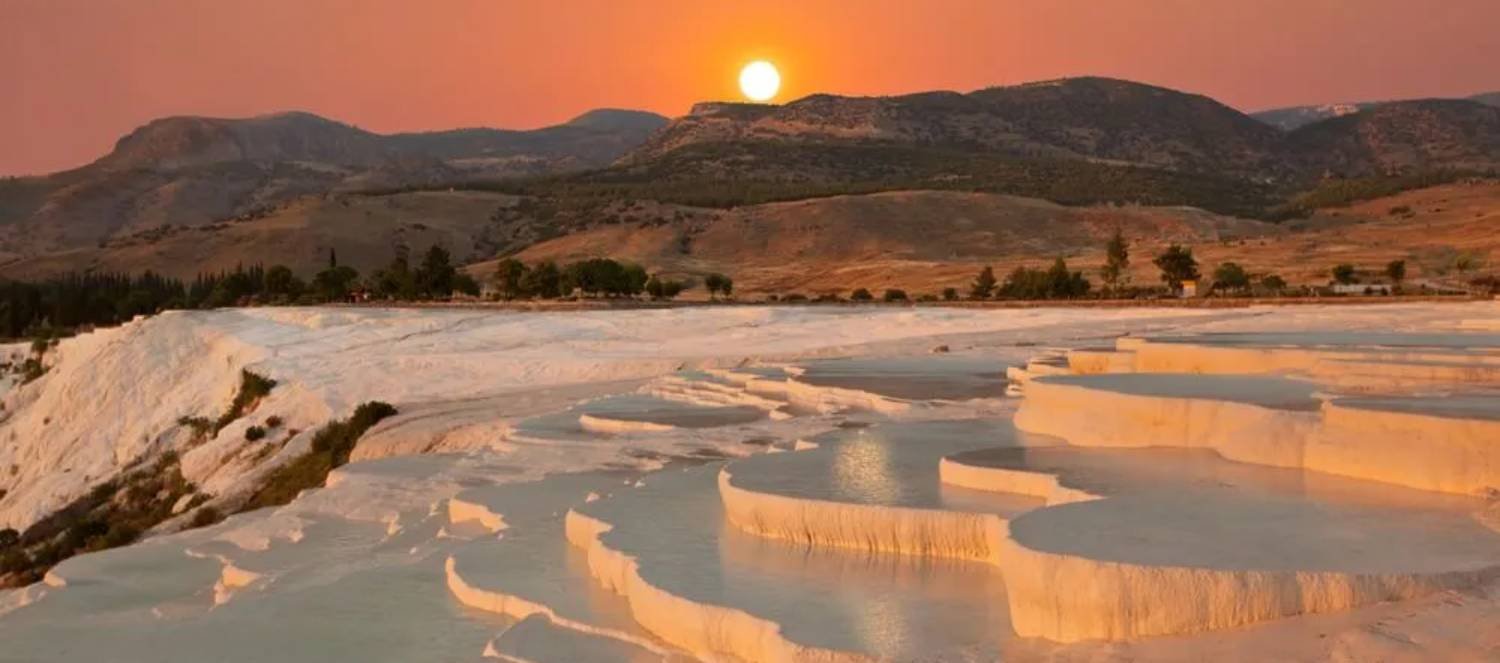
Pamukkale: Turkey’s Natural Wonder and Ancient Spa Town
Pamukkale, meaning “Cotton Castle” in Turkish, is one of Turkey’s most unique and striking natural landmarks. Famous for its stunning white travertine terraces filled with thermal waters, Pamukkale has attracted visitors for thousands of years. Located in the Denizli Province in southwestern Turkey, the area also houses the ancient city of Hierapolis, a UNESCO World Heritage Site. Pamukkale is a perfect destination for luxury seekers, wellness enthusiasts, history buffs, and adventure travelers.
Call Elite Travel at (727) 726-9090 to book your trip today.
Fun Facts:
- Pamukkale’s terraces are made of travertine and limestone deposited by mineral-rich hot springs.
- The thermal waters of Pamukkale are believed to have healing properties and have been used for medicinal purposes since Roman times.
- The ancient Greco-Roman city of Hierapolis, located above Pamukkale, was a thriving spa city founded in the 2nd century BCE.
- Cleopatra is said to have bathed in the sacred pool of Hierapolis, which is now a popular spot for visitors.
- The terraces of Pamukkale were formed thousands of years ago, and the area is protected to preserve its natural beauty.
- Pamukkale’s thermal waters maintain an average temperature of 36°C (97°F) year-round.
- Hierapolis was once a center of art, philosophy, and healing, and it housed one of the largest necropolises (cemeteries) in the ancient world.
- The ancient theatre of Hierapolis, which can seat over 12,000 spectators, is one of the best-preserved in Turkey.
- Pamukkale’s surreal landscape has often been compared to snow or clouds due to its white appearance despite the warm temperatures.
- The region has been a UNESCO World Heritage Site since 1988, recognized for its natural beauty and historical significance.
- The waters in Pamukkale are rich in calcium carbonate, which solidifies into travertine as the water flows down the terraces.
- The ruins of Hierapolis include ancient Roman baths, temples, and churches, giving visitors a glimpse into the city’s long and varied history.
- Pamukkale is one of the most photographed places in Turkey due to its otherworldly scenery.
Questions and Answers:
- When is the best time of year to visit Pamukkale?
– The best times to visit are spring (April to June) and fall (September to October) when temperatures are comfortable for exploring the terraces and the ancient ruins. Summer can be sweltering, but the terraces and pools offer some relief. - What are the must-see sights in Pamukkale?
– Explore the travertine terraces, soak in the thermal pools, and visit the ancient city of Hierapolis. Don’t miss the Cleopatra Pool, where you can swim among ancient Roman columns. The well-preserved theatre and the necropolis of Hierapolis are also essential stops. - Is Pamukkale family-friendly?
– Yes! Children will love wading through the warm thermal pools on the terraces, and families can explore the ancient ruins together. The site is generally easy to navigate, with pathways and shallow pools that are safe for kids. - What adventure activities are available in Pamukkale?
– Besides exploring the terraces and ruins, visitors can enjoy paragliding over the stunning landscape for a bird’s-eye view of Pamukkale and Hierapolis. Hiking through the surrounding natural areas is also popular. - Tell me about Pamukkale’s history and culture.
– Pamukkale has been a healing center for centuries, drawing people for its thermal waters. The nearby city of Hierapolis was an important cultural and religious hub in the ancient world. Its baths, temples, and theatres reflect the city’s significance during Roman and Byzantine times. - Is Pamukkale popular for destination weddings?
– Yes, with its unique terraces, Pamukkale offers a magical backdrop for destination weddings. Nearby resorts and boutique hotels provide luxurious accommodations for wedding parties, and the ancient ruins add an extra element of history and romance to the experience. - What group-friendly activities are available in Pamukkale?
– Group tours of the terraces and Hierapolis are standard, and many groups enjoy a relaxing soak in the Cleopatra Pool. Paragliding is another fun group activity, offering a thrilling experience over the scenic landscape. Guided historical tours of the ancient ruins are also popular with groups. - What is the local cuisine like in Pamukkale?
– Pamukkale offers traditional Turkish cuisine, including kebabs, meze (small appetizers), and pide (Turkish flatbread). Fresh local produce and regional specialties like Denizli chicken dishes are also common. Enjoy Turkish tea and desserts like baklava and sutlac (rice pudding) at local restaurants. - Are there any significant festivals in Pamukkale?
– The nearby city of Denizli hosts several festivals throughout the year, including the International Folk Dance Festival and the Rooster Festival, celebrating the city’s famous Denizli Rooster breed. Pamukkale also draws visitors during national holidays and cultural celebrations. - Can you find luxury accommodations in Pamukkale?
– Yes, Pamukkale offers a range of luxury hotels, boutique stays, and thermal spa resorts. Many accommodations include access to thermal pools, offering guests a chance to relax and enjoy the mineral-rich waters in a private setting.